
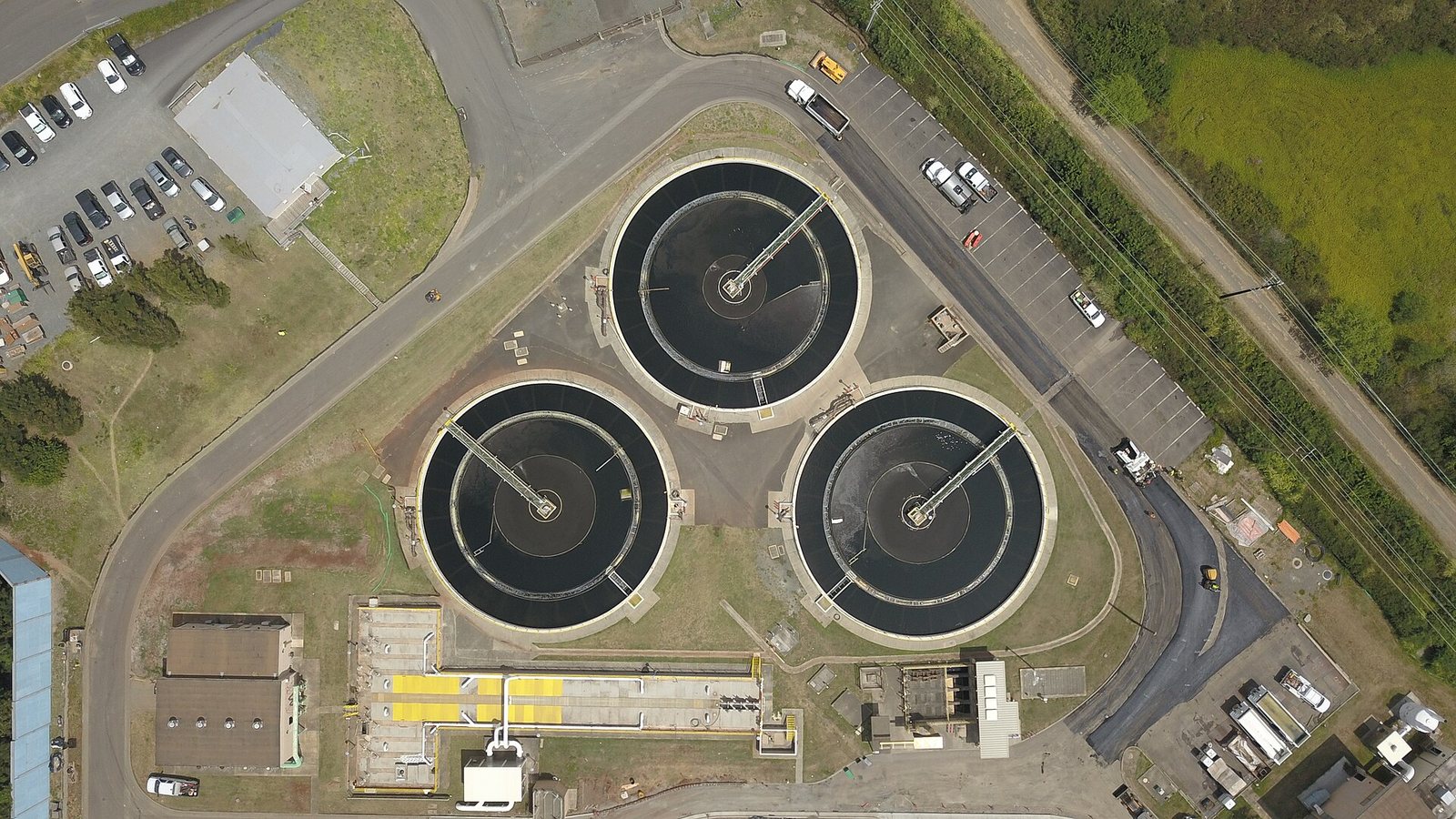
Photo: Roen Wainscoat, cropped and compressed · CC BY-SA 4.0
Quick answer
PAC is an inorganic coagulant that forms aluminum hydroxide species and supports sweep flocculation. PolyDADMAC is a permanently cationic organic polymer used mainly for charge neutralization, color reduction and coagulation support. Either may work alone, but a controlled combined-dose test can sometimes reduce PAC demand and inorganic sludge.
PolyDADMAC and polyaluminum chloride (PAC) are both used for coagulation and clarification, but they are not interchangeable. A useful comparison starts with raw-water chemistry, contaminant type, pH, downstream separation and the required treated-water quality.
How PolyDADMAC and PAC work differently
PolyDADMAC carries a permanent cationic charge that can neutralize negatively charged colloids, dyes and fine suspended matter. PAC hydrolyzes in water and forms positively charged aluminum species and hydroxide precipitates. Its performance is more closely tied to pH, alkalinity and hydrolysis conditions.
When a combined program may be useful
In some industrial wastewater systems, a small PolyDADMAC dose improves initial charge neutralization, allowing the PAC dose to be reduced. The potential benefits are faster destabilization, clearer supernatant and less inorganic sludge. This is process-dependent and should not be presented as a fixed replacement ratio.
- Establish a PAC-only baseline before changing the program
- Compare several PolyDADMAC levels while reducing PAC step by step
- Record turbidity, color, settling, sludge volume and filterability
Data needed for a useful recommendation
Provide wastewater source, pH, turbidity, COD, color, conductivity, current chemicals and dosages, treatment flow and the target result. Yuruihong PD J41, PD J45, PD J47 and PD J49 should be screened with representative water; viscosity alone is not a reliable selection rule.
Frequently asked questions
Can PolyDADMAC completely replace PAC?
It may reduce or replace part of the PAC dose in some systems, but water chemistry and treatment objectives determine the result. Jar testing is required.
Does PolyDADMAC produce less sludge than PAC?
It can reduce inorganic sludge when it lowers the required PAC dose, but total sludge also depends on contaminant removal and downstream solids handling.
Should PolyDADMAC be dosed before or after PAC?
Both sequences should be tested because contaminant charge, mixing intensity and flocculation conditions can change the preferred order.