
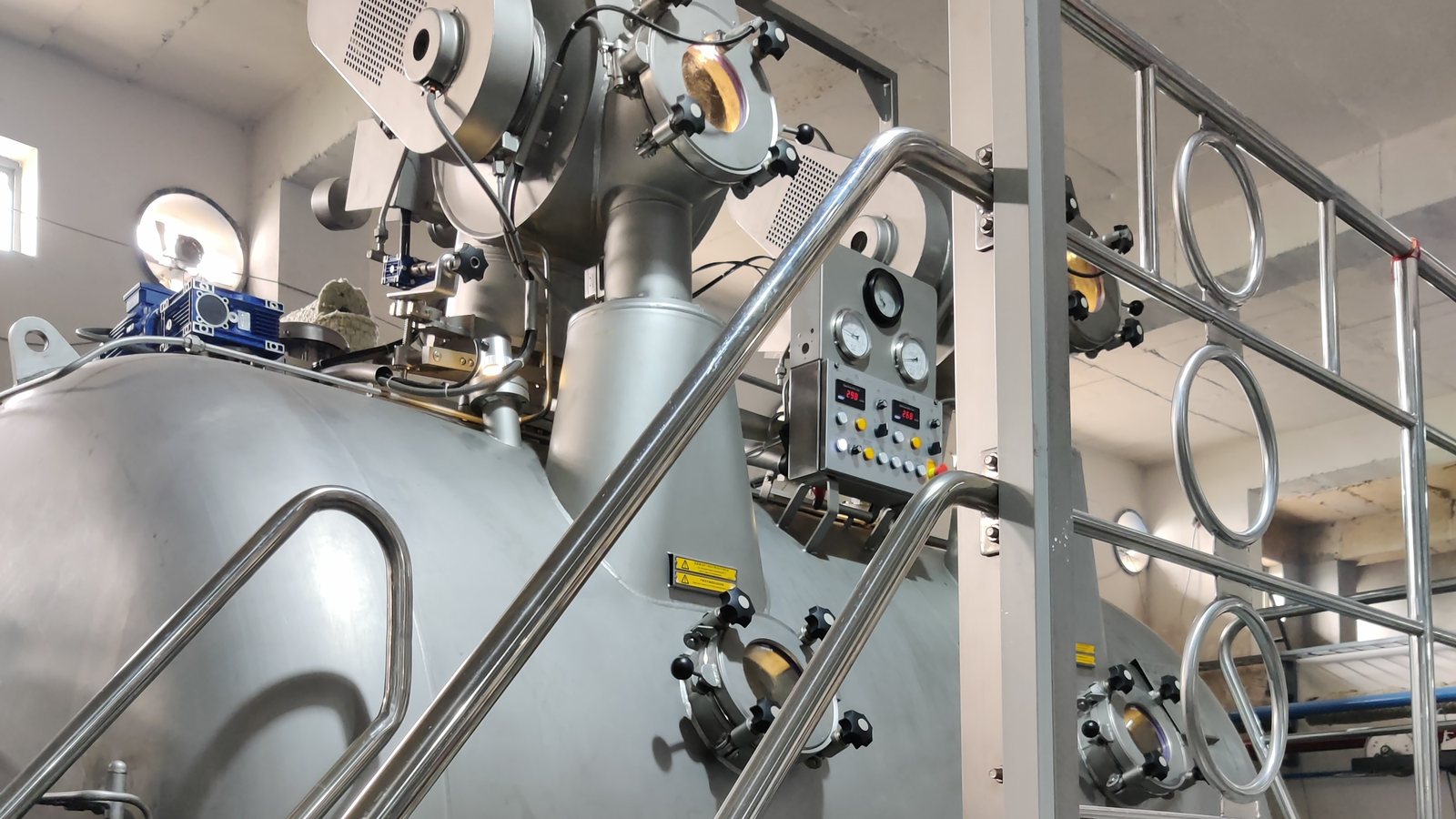
Photo: RAJIVVASUDEV, cropped and compressed · CC BY-SA 4.0
Quick answer
PolyDADMAC can support textile-wastewater decolorization by charge neutralization and coagulation, but performance depends on dye class, pH, salts and auxiliary chemicals. Screen it on representative mixed or segregated streams and evaluate color, COD, settling and downstream compatibility together.
Textile wastewater decolorization is one of the application areas where PolyDADMAC is frequently considered, but product selection still depends on wastewater conditions. Different dye classes, salt levels, pH ranges and auxiliary chemicals can all affect the response of the treatment system. In some plants, the main target is color removal; in others, the target may be a combination of color reduction, COD improvement, clarification or sludge control.
Before recommending a PolyDADMAC grade, buyers should ideally prepare data such as wastewater source, pH, color level, COD, suspended solids, conductivity or salinity, and whether there is an existing coagulation-flocculation sequence. This information helps narrow whether PolyDADMAC should mainly function as a cationic coagulant, a charge-neutralization aid or part of a combined decolorization program with other chemicals.
For textile dyeing and printing wastewater, it is also helpful to know whether the stream is mixed or segregated, whether biological treatment follows chemical treatment, and what result is considered acceptable after the jar test. Some buyers focus on visible color reduction, while others need improved sedimentation, lower sludge carryover or better compatibility with downstream treatment. That is why dosage screening should be tied to treatment objectives instead of a fixed reference number.
A practical buying workflow is to begin with representative wastewater samples, compare several PolyDADMAC viscosity ranges or charge-response options, and observe color removal together with settling speed and supernatant clarity. Buyers sourcing from China may also want to confirm solids content, storage conditions, packaging format and sample availability before scale-up. Clear test inputs almost always shorten the path from inquiry to a useful model recommendation.
1. Understand why textile wastewater changes
Reactive, direct, acid, disperse and other dye systems do not respond identically to cationic treatment. Salt, alkali, surfactants, sizing agents and finishing chemicals can alter charge demand and soluble color. A composite equalization-tank sample may be appropriate for plant control, while segregated samples are more useful for diagnosing a difficult production stream.
Record production schedule and sample time with the analytical data. A result obtained on one dye lot should not be treated as a universal plant dosage.
2. Define the role of PolyDADMAC in the treatment train
PolyDADMAC may be screened as a primary cationic coagulant, a charge-neutralization aid before an inorganic coagulant, or part of a combined program followed by a flocculant. The best dosing point depends on the wastewater, rapid-mixing energy, pH adjustment and the objective of the next separation step.
Color removal and COD removal are not the same measurement. Removing dye-related color may reduce part of the COD, but soluble non-color organics can remain. Report both when COD compliance matters and do not infer one result from the other.
3. Use a test matrix, not a single-dose trial
Screen pH and dosage in a compact matrix, then compare PolyDADMAC grades or viscosity ranges around the best region. Keep mixing and settling time constant. If an inorganic coagulant or PAM is used, test the order of addition because simultaneous dosing can hide the contribution of each component.
- Apparent and instrument-measured color
- COD, turbidity and supernatant clarity
- Settling rate, sludge volume and filterability
- Effect on biological treatment or reuse process
4. Data buyers should send with an inquiry
Send wastewater source, dye classes, pH, color method and value, COD, TSS, conductivity, temperature, existing chemical sequence and target discharge or reuse requirement. Photos are useful for context but cannot replace standardized color and turbidity measurements.
Frequently asked questions
Does PolyDADMAC remove every type of textile dye?
No. Response varies by dye chemistry, wastewater composition and process conditions. Representative testing is required.
Will better decolorization always mean lower COD?
No. Color and COD measure different properties. Both should be tested when both are treatment objectives.
Should PolyDADMAC be used alone or with PAM?
Either can be appropriate. Combination programs are common when charge neutralization is followed by floc growth, but the sequence and dose must be tested.
Related Solutions
PolyDADMAC and DADMAC / DMDAAC monomer products for water treatment, papermaking, textile decolorization and charge control.
Cationic, anionic and nonionic polyacrylamide plus polymeric and emulsion flocculants for solid-liquid separation.
PolyDADMAC and flocculants for dyeing wastewater treatment, decolorization, suspended solids removal and sludge dewatering.
PolyDADMAC, polyacrylamide and flocculants for industrial wastewater treatment, municipal wastewater, clarification, coagulation, flocculation and decolorization.